News and Updates
The latest in e-RA and the Long Term experiments
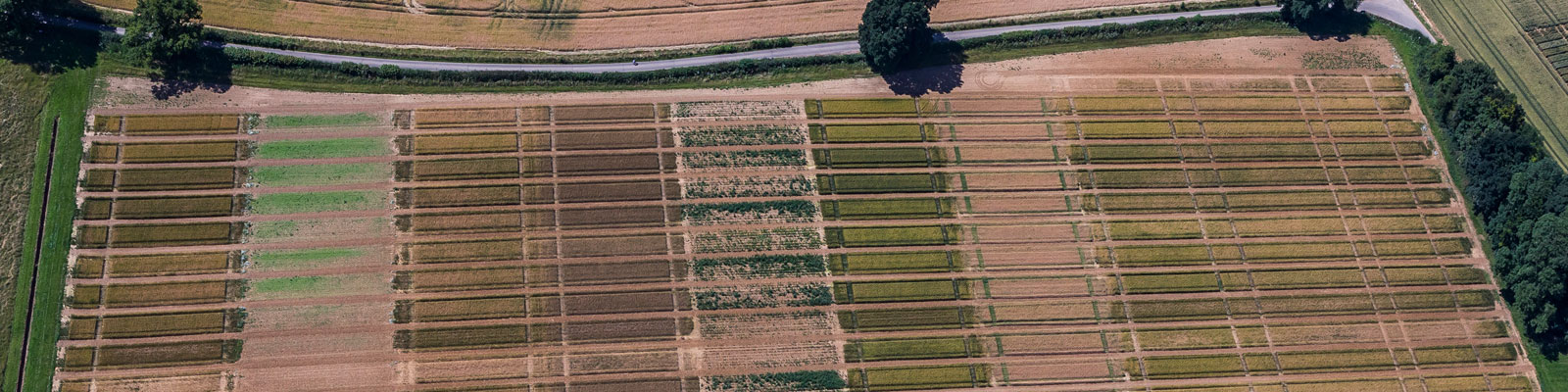
Broadbalk
More than 175 years of data on Winter Wheat
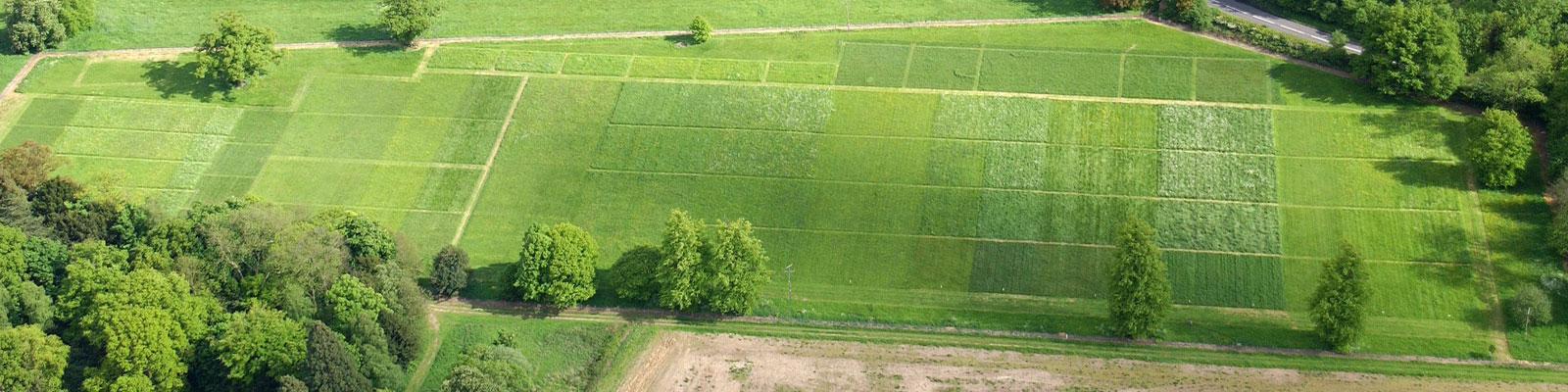
Park Grass
150 years of ecological studies
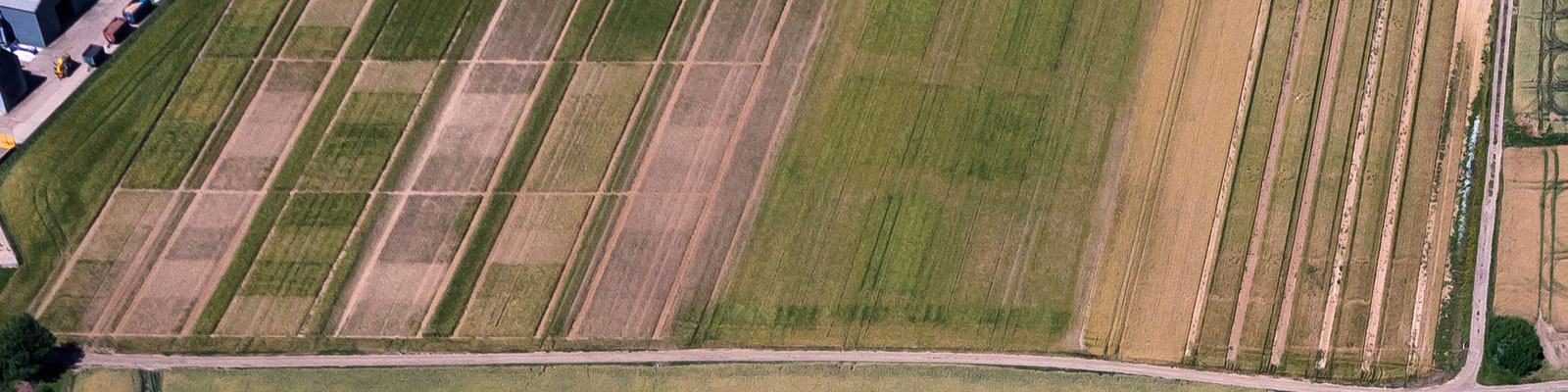
Hoosfield
Experiments on Barley
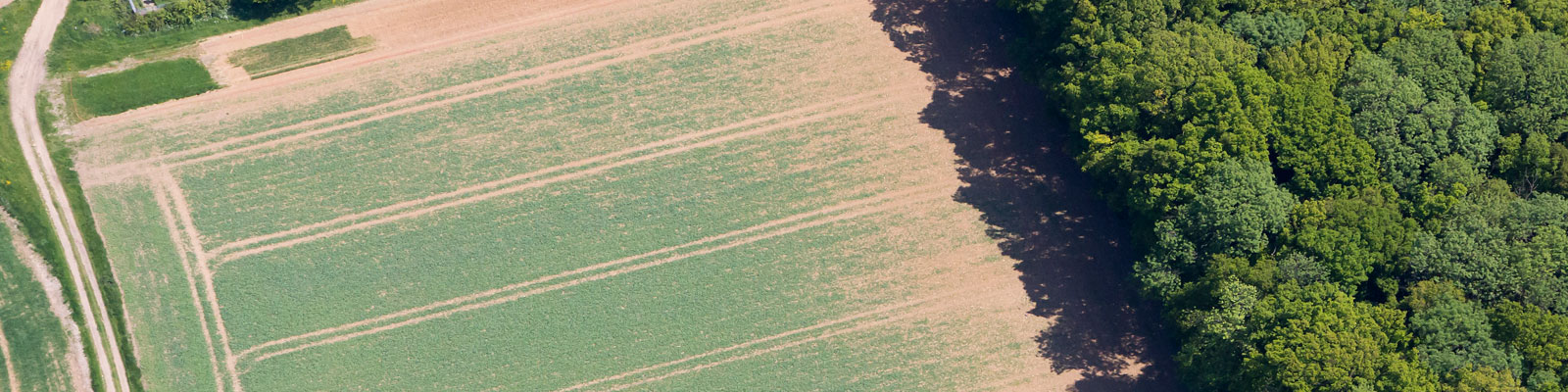
Geescroft
A wilderness experiment
e-RA provides a permanent managed database for secure storage of data from Rothamsted's Long-term Experiments, the oldest, continuous agronomic experiments in the world. Together with the accompanying meteorological records, associated documentation and sample archive, it is a unique historical record of experiments that have been measured continuously since 1843.
Browse the e-RA site using the top menu:
- Sites: Rothamsted Research has experimental arable farms across four sites in England, the original and most important is at Rothamsted, Harpenden (since 1843), with others at Woburn (since 1876), Brooms Barn (since 1962) and Saxmundham (1965-2010).
- Experiments: Lists the main long-term experiments, grouped by research farm. Each experiment is described extensively and has a list of all the collated datasets currently available for it, supporting documentation, site details, history and images.
- Datasets: The Open Access Datasets (OADs) currently available for the long-term experiments. We include advice on copyright, appropriate credits, data quality and how to access the two different types of datasets. New prepared datasets are announced on Twitter.
- Meteorological Data: Daily meteorological data is recorded at three of the Rothamsted Research sites: Rothamsted, Woburn and Brooms Barn. Summary data is available for Saxmundham. This section provides information on the available collated datasets plus data collection and processing methods, advice on copyright, appropriate credits, data quality and how to access the three different types of datasets. We also provide educational activities and datasets for schools.
- About: Information on the e-RA project, who to contact, how to give credit and news on Twitter.
Use our tools to search the database, publications and scanned historical documents
Types of Data
- Open Access Datasets (OADs): Data directly downloadable with accompanying metadata, no password required.
e-RAdata: This database (previously the Data Extraction Tool, DET) provides the daily meteorological data. It also contains original LTE data, no accompanying metadata. It requires registration for a password.
Summary Open Access Datasets (Summary OADs) - Provide averaged or selected data with some accompanying metadata and descriptions. These provide a summary overview of key data, findings, trends, or changes in the data averaged across a restricted number of plots and/or years. Both LTE and met data are in this format. Meteorological (met) data present daily data averaged to monthly or annual values.
Complete Open Access Datasets (Complete OADs) - 'Frictionless' format providing comprehensive data with full metadata contained in file. These provide all plots and years relating to a distinct period of time in an LTE, in a machine-readable format with treatments, agronomic information and yields provided. Currently only LTE data is provided in this format.,
Please read the complete information in our "How to Access Datasets Page"
e-RA tools
e-RAdata
Access the e-RA database using the Data Extraction Tool. Contact the e-RA Data Curators for access.
e-RApubs
Search e-RA publications database for publications which have used the Rothamsted Long-term Experiments.
e-RAdoc
Access the e-RA scanned document archive, including annual reports, annual yield books, maps and other documents relating to the Long-Term Experiments.
For further information and assistance, please contact the e-RA curators, Sarah Perryman and Margaret Glendining using the e-RA email address: era@rothamsted.ac.uk
The e-RA Project Team Today
Project Management Team

Richard Ostler
Project Leader

Nathalie Castells
Software Developer

Margaret Glendining
Data curator

Sarah Perryman
Data curator
Data Provision, Preparation and Analysis

Chris Hall
Field Technician

Andy Gregory
Project leader

Tony Scott
Environmental Scientist

Suzanne Clark
Statistician
More information
The electronic Rothamsted Archive, e-RA, provides a permanent managed database to both securely store and disseminate data from Rothamsted Research's long-term field experiments (since 1843) and meteorological stations (since 1853). Both historical and contemporary data are made available via this online database which provides the scientific community with access to a unique continuous record of agricultural experiments and weather measured since the mid-19th century. The data are accompanied by extensive supporting documentation and the e-RA curators provide tailored assistance and support in selecting and understanding data as suits users' needs.
Further information on the development of e-RA and cases studies of uses of the data are described in Perryman et al, 2018 and in Ostler et al, 2023.
The e-RA project is an ongoing process with more data from Rothamsted's historical long-term experiments being provided continuously to make it an ever-growing resource.
Today e-RA is part of the Rothamsted Long-Term Experiments - National Bioscience Research Infrastructure (RLTE-NBRI), which also covers maintenance of the Long-Term Experiments, the Rothamsted Sample Archive and Rothamsted's environmental monitoring activities including the weather stations and its role in the UK Environmental Change Network
The RLTE-NBRI is funded by UK Research and Innovation - Biotechnology and Biological Sciences Research Council (UKRI-BBSRC) under award BBS/E/RH/23NB0007 (2023-2028). The RLTE-NBRI is also supported by the Lawes Agricultural Trust. e-RA has been part of a National Capability since 2012, previous awards from the BBSRC were Grants BBS/E/C/00005189 (2012-2017) and BBS/E/C/000J0300 (2017-2022).
The development of e-RA
Plans for e-RA were laid out in 1990 and it was initiated in 1991, funded by the Lawes Agricultural Trust (LAT) and the Leverhulme Trust. At this stage, it was based on an ORACLE database management system under the UNIX™ operating system and programs specific to e-RA were written to perform tasks of data entry, description, and extraction. Perl scripts were used to generate static content HTML pages. A dedicated website for data extraction and background information was developed and this was one of the earliest data portal sites in the UK. The initial test version of the e-RA database Version 1 was available with a limited subset of data in 1993.
A major refactoring of the e-RA code base began in 2005 and, following migration to Microsoft SQL Server, Version 2 of the e-RA database was released to Rothamsted users in February 2009. A new e-RA website was released in March 2011, incorporating an extensive overhaul of the previous site with major additions to the content including comprehensive background information about the field experiments and meteorological data.
Refinements were made to the database to provide public access to an updated e-RA V2 and the launch of the e-RA database externally to the wider scientific community in May 2013. The most recent major addition to e-RA was the Document Archive (e-RADoc) which contains scanned copies historical document. Selected datasets started being made Open Access in 2013 and provided with Digital Object Identifiers from 2017. In May 2021 a new version of e-RA was released incorporating FAIR data principles (Wilkinson et al 2016).


For further information and assistance, please contact the e-RA curators, Sarah Perryman and Margaret Glendining using the e-RA email address: era@rothamsted.ac.uk